

What a Check Engine Light Tells You (2026)
A check engine light means the vehicle’s computer detected a condition outside expected operating limits. It does not automatically identify a failed part. A steady light usually permits careful driving to a repair shop, while a flashing light can signal a serious risk—stop driving, shut off the vehicle, and arrange a tow.
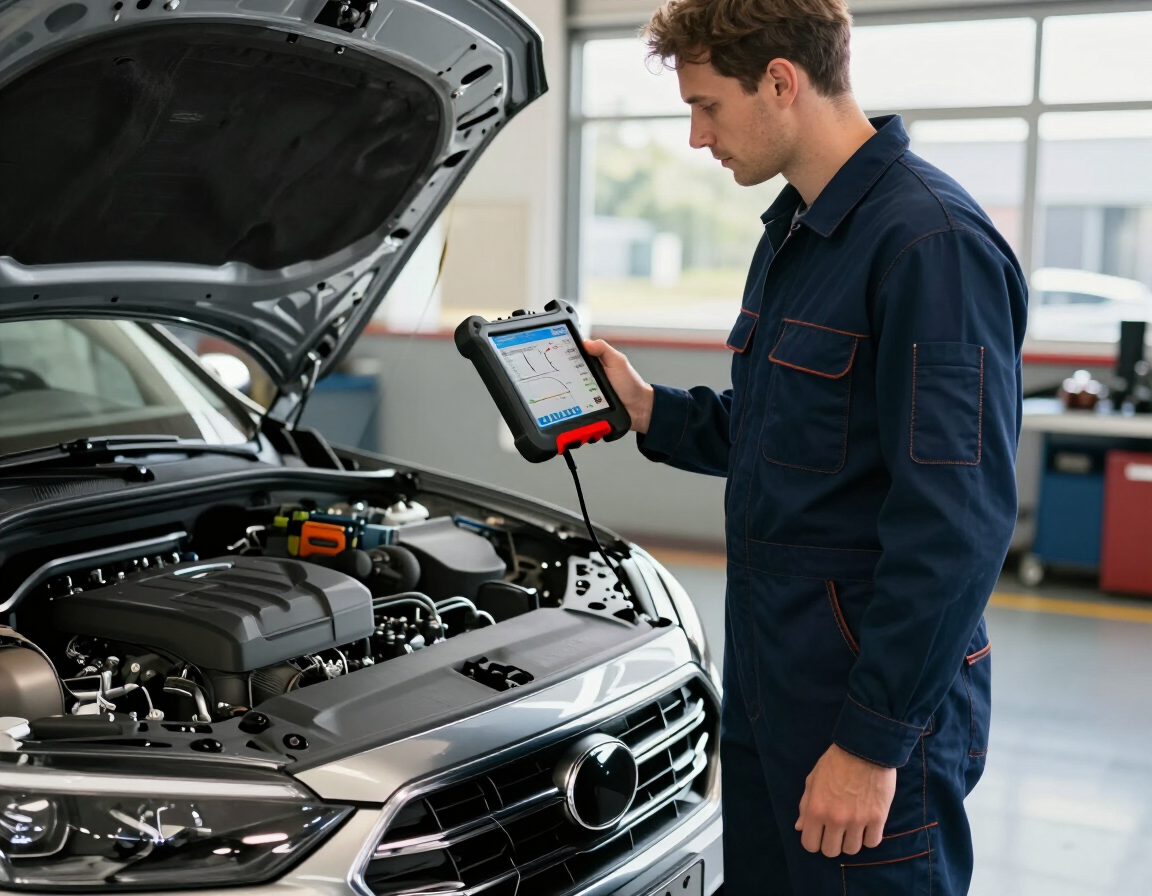
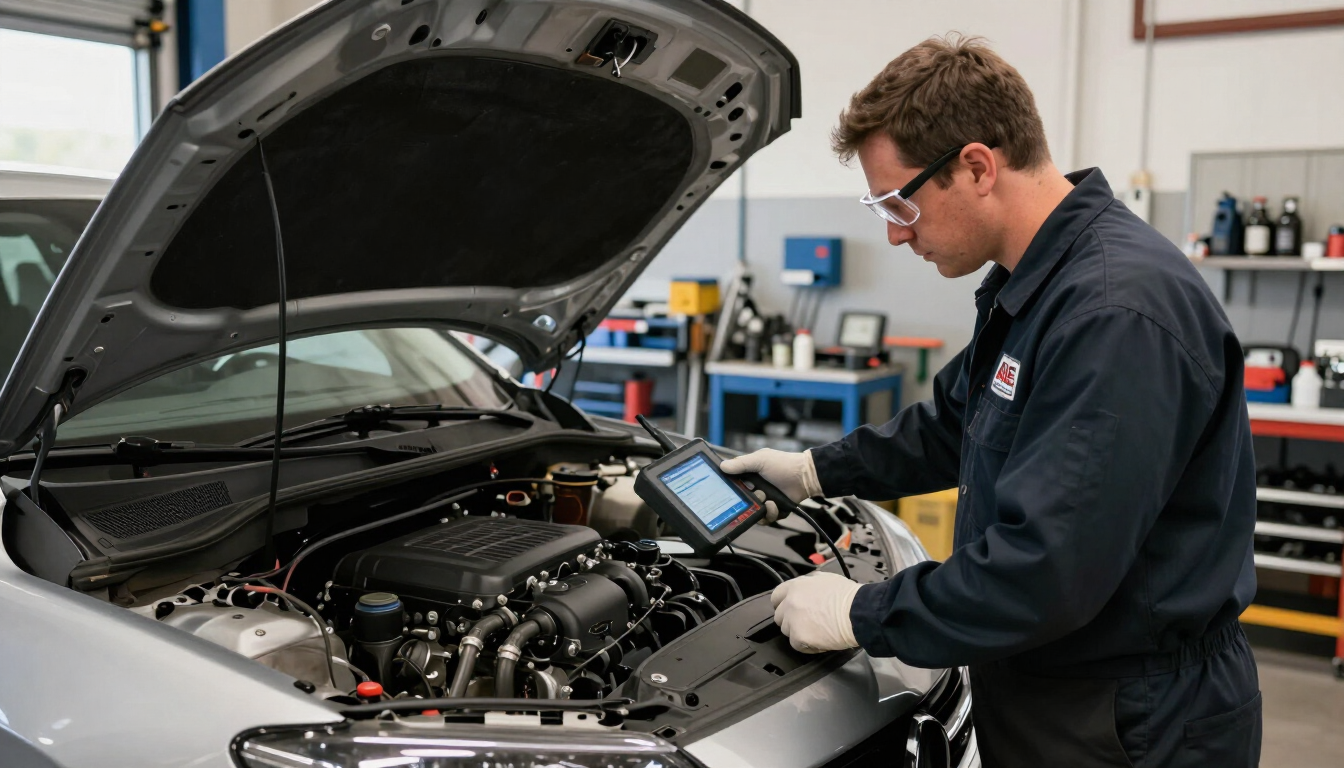
An ASE-certified technician uses a scan tool as the first step in understanding a check engine light.
What does a check engine light mean?
The check engine light, also called the malfunction indicator lamp, is part of the vehicle’s onboard diagnostic system. Sensors monitor systems involved in engine operation and emissions. When the computer sees readings or behavior outside its programmed range, it stores diagnostic information and turns on the warning light.
That information is useful, but it is not a complete diagnosis. It describes a detected condition, such as an unexpected signal, a performance issue, or a system that is not operating as expected. Several different causes can create a similar condition, and one underlying issue can affect multiple systems.
In plain terms, the light is a request for testing—not a verdict that a particular component has failed.
Does a diagnostic code identify the bad part?
No. A diagnostic code identifies a condition the computer noticed. It does not prove that a sensor, ignition component, wiring connection, valve, or other part is defective.
A professional technician uses the code as a starting point, then checks the evidence behind it. Depending on the vehicle and symptoms, that may include:
- Reviewing stored and pending diagnostic information
- Looking at live data while the vehicle runs
- Inspecting wiring, connectors, hoses, and related components
- Performing measurements or system tests
- Confirming the repair and verifying that the condition does not return
Replacing a part based only on a code can waste time and fail to correct the underlying problem. Proper check engine light diagnostics connect the computer’s information with physical inspection and test results.
Steady vs. flashing: how urgent is it?
The light’s behavior matters.
What should you do if the light is steady?
A steady check engine light generally means the computer has detected a condition that should be checked soon. If the vehicle feels normal, drive gently and avoid unnecessary trips until you can arrange an inspection.
Pay attention to changes in how the vehicle runs. Note unusual noises, roughness, reduced power, unusual smells, smoke, or other warning lights. Share those observations with the technician because they can help guide the testing process.
A steady light still deserves attention. Continuing to drive indefinitely may allow a small issue to become a larger one or affect other vehicle systems.
What should you do if the light is flashing?
If the check engine light is flashing, stop driving. A flashing warning can indicate a condition that may quickly damage the engine or emissions-control system. Safely pull over, turn the vehicle off, and arrange a tow to a qualified repair shop.
Do not continue driving to “see if it goes away,” even if the vehicle seems able to move. If you are unsure what to do after stopping, contact Big Z Tire and Wheel for guidance.
How does a technician find the actual cause?
Diagnosis is a process of confirming what the vehicle is doing and why. At Big Z Tire and Wheel , an ASE-certified technician can begin with a scan, but the scan is only one part of the evaluation.
A typical diagnostic process may include:
- Gathering information: The technician asks when the light appeared, whether it is steady or flashing, and what symptoms you noticed.
- Scanning the vehicle: The diagnostic tool retrieves relevant information from the vehicle computer.
- Checking conditions: The technician reviews live readings, freeze-frame information, service history, and operating conditions when appropriate.
- Inspecting related systems: Connections, wiring, air paths, fluids, and mechanical components may be checked based on the evidence.
- Testing the suspected area: Measurements and targeted tests help separate a failed part from a wiring, mechanical, software, or operating-condition issue.
- Verifying the result: After the work is completed, the vehicle is tested to confirm the warning condition has been addressed.
This approach helps prevent guesswork. It also explains why a responsible technician may need time to test before recommending a repair.
Vehicle data gives a technician more context than the warning light alone.
What information should you bring to the shop?
Before your appointment, write down what you know. Helpful details include:
- When the light first appeared
- Whether it is steady or flashing
- Whether the vehicle was cold, warm, accelerating, or idling
- Changes in starting, power, smoothness, fuel use, or sounds
- Any recent maintenance, repairs, fuel stop, or unusual event
- Whether another warning light appeared at the same time
Do not erase diagnostic information or disconnect the battery just to turn the light off unless a qualified technician instructs you. Clearing information can remove useful evidence and may make the cause harder to confirm.
For related concerns, you can also review Big Z Tire and Wheel’s Diagnostics , Engine Repair , and Battery & Electric services.
When should Rockvale drivers bring in a vehicle?
Bring the vehicle in promptly when the light is steady, especially if it remains on after a short drive or returns after being cleared. Schedule service sooner if the vehicle runs differently, loses power, starts poorly, or displays additional warnings.
A flashing light is different: stop driving and arrange a tow. Do not rely on the vehicle feeling “mostly fine.” Warning-light urgency depends on the condition the computer detected, and only testing can determine what is happening.
Big Z Tire and Wheel serves drivers in Rockvale, TN, with diagnostics for cars and trucks of every make and model. If you need help deciding the next step, use the Contact page.
Testing and inspection help connect a warning message to the vehicle’s real condition.
Frequently asked questions
Can a check engine light turn off by itself?
It can, if the computer no longer detects the condition during later drive cycles. That does not prove the underlying issue is fixed. Stored information may remain, so have the vehicle checked if the light returns or the vehicle behaves differently.
Can I drive with a steady check engine light?
If the vehicle feels normal and the light is steady, careful driving directly to a repair facility is generally more appropriate than ignoring it. Avoid unnecessary driving and arrange diagnostics soon. Stop and tow the vehicle if the light flashes or serious symptoms appear.
Why can’t a technician replace the part named by the scan?
Because the scan identifies a condition, not necessarily the failed part. Testing confirms whether the cause is a component, wiring, connection, mechanical issue, or another related factor.
The takeaway
A check engine light is an early warning from your vehicle’s computer, not a complete diagnosis. A steady light means arrange testing soon and drive cautiously only if the vehicle feels normal. A flashing light means stop driving, shut the vehicle off, and arrange a tow. Diagnostic information names a condition; an experienced technician uses inspection, live data, and targeted tests to find the cause. If your light has appeared, note what happened, avoid clearing the information, and contact Big Z Tire and Wheel in Rockvale to decide the safest next step.